September 22, 2026 Post by : Editorial Techniques and Tips
Paper Craft for Grown-Ups: Why Folding Is a Surprisingly Good Way to Unwind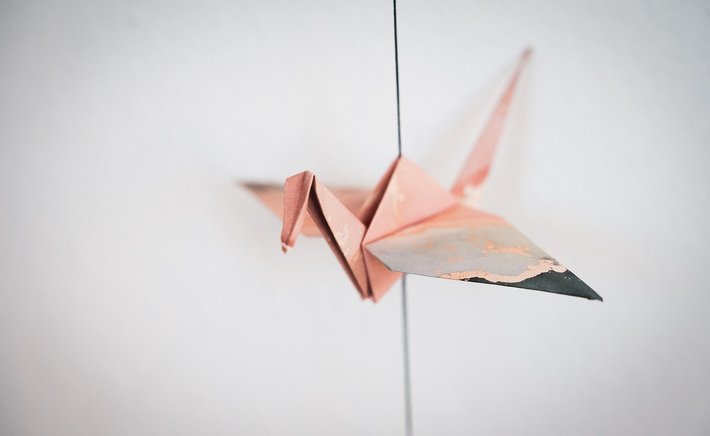
Every paper airplane, no matter how complex, is built from a small set of basic folds. Learn them well and you'll stop struggling with instructions and start improvising your own designs. Think of these as the vocabulary of paper folding. Once you know the words, you can write your own sentences. Here are the five techniques I use in almost every plane I build, along with the small details that make each one work.
The first is the valley fold, the most common fold in all of paper craft. You fold the paper toward yourself so the crease forms a valley when viewed from the side. The key is to match corners precisely before pressing the crease down. Run your fingernail or a bone folder from the center of the fold outward in both directions. Pressing from the center prevents the paper from stretching and keeps the edges aligned. A good valley fold is crisp, straight, and doesn't pucker.
The Mountain Fold and the Inside Reverse Fold
The mountain fold is the valley fold's mirror image. You fold the paper away from yourself so the crease forms a ridge. Mountain folds show up in tails, wingtips, and the locking flaps that hold a plane together. The same rule applies: align before you press, and crease from the center outward. If you're folding a mountain on a line that's already been valley folded, flip the paper over and fold the same line in the opposite direction.
The inside reverse fold is where beginners often get stuck, but it's essential for shaping noses and tails. To make one, start with a valley fold, then open the paper slightly and push the folded flap inside the model along the existing crease. The paper turns itself inside out and the flap ends up hidden between the layers. Practice this on a simple square before trying it on a plane. Once it clicks, you'll use it constantly.
The squash fold is the fourth technique. It takes a flap that's folded at an angle and flattens it into a symmetrical shape. Lift the flap, open it along its crease, and press it down flat so the original crease becomes the center line of a new triangle or square. Squash folds are how you create the wide, stable noses on gliders and the broad wing roots on more advanced designs. The trick is to open the flap fully before pressing, so the paper has room to lie flat.
The Petal Fold and Why Precision Matters
The fifth technique is the petal fold, which combines a squash fold with a reverse fold to create a long, tapered point. It's the fold behind classic dart noses and many origami bases. Lift a flap, squash it open, then fold the sides in toward the center and lay the top section down. The result looks like a flower petal, hence the name. It takes a few tries, but it's worth learning because it produces the cleanest, most aerodynamic noses in paper aviation.
Beyond the folds themselves, two habits separate clean planes from messy ones. First, always fold on a hard, flat surface. Folding in the air or on a soft couch produces weak creases. Second, keep your folds symmetrical. Fold the left side, then flip the paper and fold the right side to match, rather than eyeballing both. Symmetry is the difference between a plane that flies straight and one that spirals into the wall.
Spend an evening folding each of these five techniques on scrap paper until they feel automatic. Then pick any tutorial on this site and you'll find the instructions read much more smoothly. The folds are the foundation; the planes are just what you build with them.


Author

22 feb,2025
This incident opened my eyes to the value of Insurance in general, so I decided to examine my personal and business insurance.


Comment (3)
The payments are made directly from one person to another without passing through a central bank or clearing house.
22 feb,2025
ReplyThe Dart vs. The Glider: Two Beginner Paper Airplanes That Teach Completely Different Lessons
23 feb,2025
ReplyFold a Paper Airplane From a Single Index Card: Tiny Planes, Big Fun
23 feb,2025
Reply