October 4, 2026 Post by : Editorial Beginner Folds
Paper Airplane STEM Challenge: A 45-Minute Lesson Plan for Any Classroom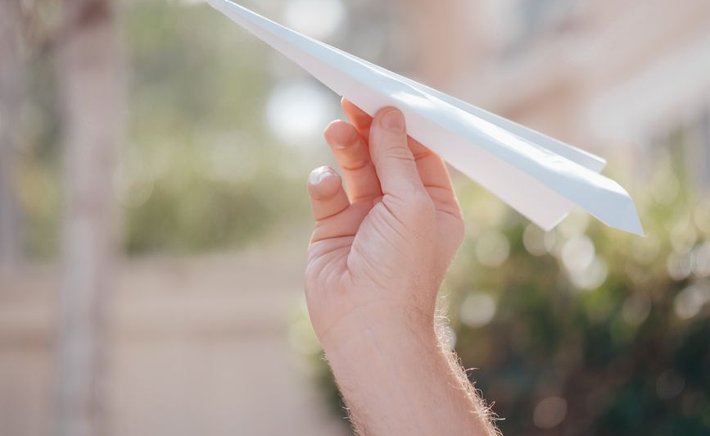
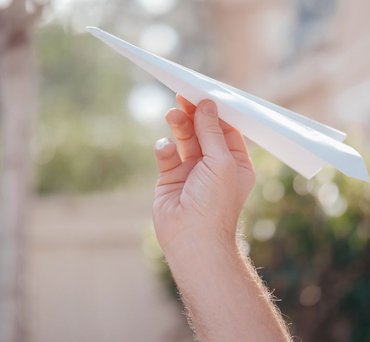
When someone hands you a piece of paper and says "make an airplane," most of us fold the same pointed dart we learned as kids. It flies fast, it flies far, and it's a great place to start. But if you only ever fold darts, you're missing half of what paper airplanes can teach. The dart and the glider are the two foundational designs in this hobby, and they behave so differently that folding both in one sitting is the fastest way to understand how paper flight actually works.
Let's start with the dart, because it's likely already in your muscle memory. Take a standard sheet of 8.5 by 11 inch paper, fold it in half lengthwise, unfold, then bring the top two corners to the center crease. Fold the resulting triangle down, then fold the new top corners to the center again. Fold the whole thing in half, and crease the wings down so their edges meet the bottom of the fuselage. That's it. The dart is narrow, heavy in the nose, and wants to go fast. Throw it with a firm, level snap of the wrist, not a lob.
Why the Glider Is Worth the Extra Patience
The glider is where beginners learn finesse. Start with the same lengthwise crease, but this time bring the top corners to the center and stop there. Flip the paper over, fold the top edge down about an inch, then fold the corners to the center again. Fold the nose down to lock the layers, fold the plane in half, and crease the wings so they sit flat and wide. The glider has a blunt nose, broad wings, and almost no weight up front. Throw it gently, almost like you're releasing a soap bubble, and it will float across the room instead of diving.
The real lesson comes when you adjust both planes. On a dart, a tiny upward bend at the back of each wing creates lift and stretches the glide. On a glider, the same bend might make it stall and tumble. This is the core of paper aerodynamics: the same tweak does different things depending on weight, wing area, and nose shape. Fold both, throw both, and compare. You'll learn more in ten minutes of testing than in an hour of reading.
Turning This Into a Teaching Moment
If you're an educator, this pair of planes is a ready-made science activity. Hand out one sheet per student, walk through the dart together, then the glider, and send everyone outside or into a hallway for a flight test. Ask them to record which plane travels farther, which stays in the air longer, and what happens when they add a paperclip to the glider's nose. Those three questions cover distance, air time, and weight distribution without ever sounding like a lecture.
Keep a stack of scrap paper near your workspace and fold each design three or four times. Consistency matters more than perfection. Once your creases are sharp and your folds are symmetrical, both planes will fly predictably, and predictability is what lets you experiment. The dart teaches commitment and speed; the glider teaches patience and balance. Together, they're the best first lesson in paper flight.
Author

22 feb,2025
This incident opened my eyes to the value of Insurance in general, so I decided to examine my personal and business insurance.

Comment (3)
The payments are made directly from one person to another without passing through a central bank or clearing house.
22 feb,2025
ReplyFold a Flapping Bird That Actually Moves When You Pull Its Tail
23 feb,2025
ReplyHow to Host a Paper Airplane Olympics for Kids in One Afternoon
23 feb,2025
Reply